

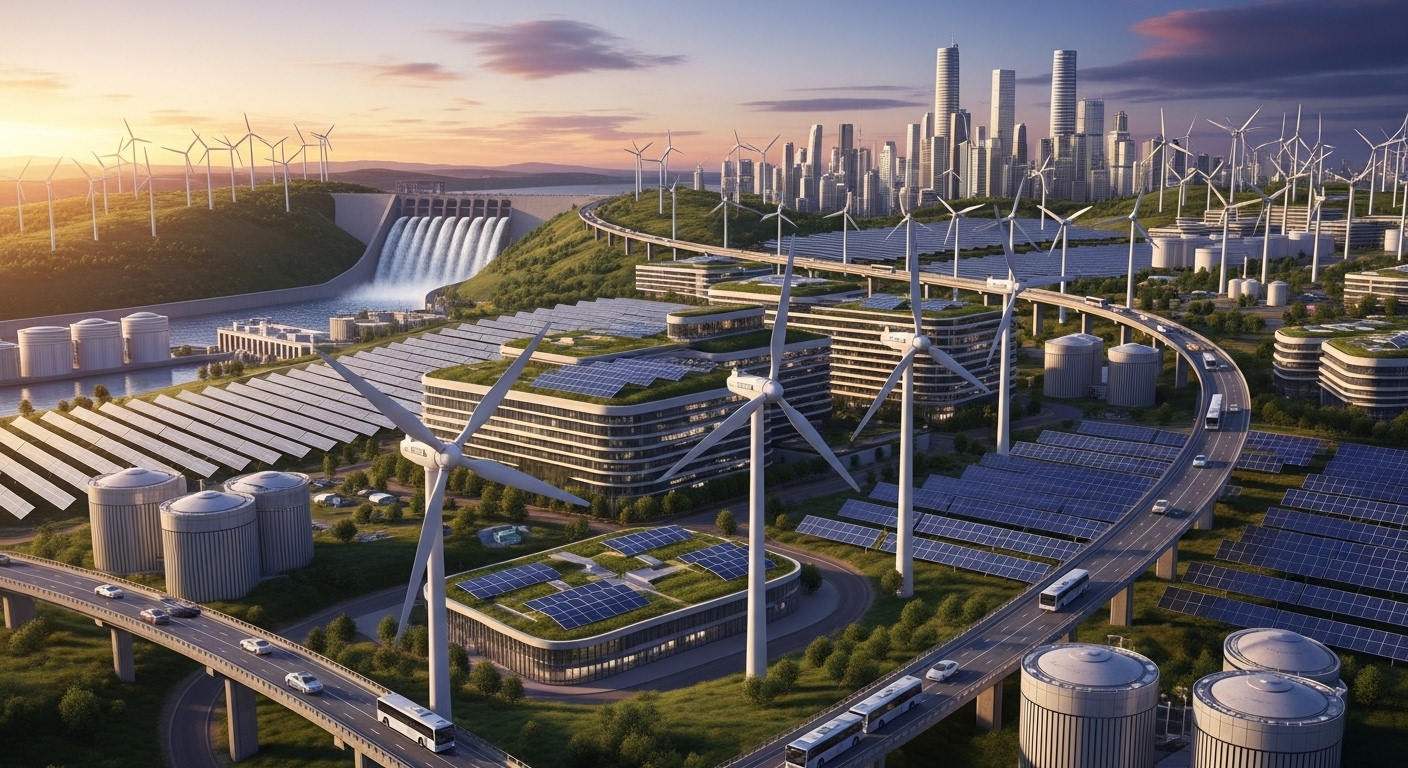
Global renewable energy markets are expanding at a remarkable pace as governments, corporations, and investors accelerate the shift toward clean power solutions. Rising climate concerns, energy security needs, and technological advancements are driving large-scale investments in solar, wind, hydro, and green hydrogen projects, reshaping the global energy landscape toward sustainability and low-carbon growth.
Global Renewable Energy Expansion Trends
Solar Energy Capacity Growth
Solar energy capacity is expanding rapidly as countries invest heavily in large-scale photovoltaic projects and rooftop installations. Declining solar panel costs and improved efficiency are making solar power more accessible, enabling widespread adoption across residential, commercial, and industrial sectors in both developed and emerging economies worldwide.
Wind Power Development Surge
Wind power development is accelerating globally as offshore and onshore wind farms become central to clean energy strategies. Governments are increasing subsidies and infrastructure support to boost wind energy production, while technological improvements in turbine design are enhancing efficiency and reducing long-term energy generation costs significantly.
Hydropower Modernization Projects
Hydropower systems are being modernized to improve efficiency, safety, and environmental sustainability. Many countries are upgrading existing dams and integrating smart monitoring systems to optimize water flow and energy output. These modernization efforts ensure hydropower remains a stable and reliable renewable energy source globally.
Green Hydrogen Investments
Green hydrogen is emerging as a key future energy solution, attracting massive investments from governments and energy corporations. Produced using renewable electricity, green hydrogen is being developed for use in transportation, heavy industry, and power storage, offering a clean alternative to fossil fuels in global energy systems.
Bioenergy Expansion Programs
Bioenergy is gaining momentum as countries invest in sustainable biomass and biofuel production. These programs convert organic waste into usable energy, reducing landfill dependency and lowering carbon emissions. Bioenergy is becoming an important part of diversified renewable energy portfolios worldwide.
Government Policies Driving Clean Energy Growth
Renewable Energy Incentives
Governments are introducing financial incentives such as tax credits, subsidies, and grants to encourage renewable energy adoption. These policies reduce initial investment barriers and accelerate deployment of clean energy infrastructure across residential, commercial, and utility-scale projects globally.
Carbon Reduction Targets
Strict carbon reduction targets are pushing countries to transition away from fossil fuels. National policies are aligning with international climate agreements, forcing industries to adopt cleaner technologies and increasing demand for renewable energy sources across global markets.
Net Zero Commitment Strategies
Many nations have committed to achieving net-zero emissions within coming decades. These strategies include large-scale renewable energy investments, electrification of transport systems, and industrial decarbonization efforts aimed at reducing greenhouse gas emissions worldwide.
Public-Private Energy Partnerships
Public-private partnerships are playing a crucial role in accelerating renewable energy deployment. Governments collaborate with private companies to fund infrastructure projects, share risks, and improve innovation, ensuring faster transition toward clean and sustainable energy systems globally.
Energy Regulation Reforms
Energy regulations are being reformed to support renewable integration into national grids. These reforms simplify approval processes, encourage competition, and ensure fair access to energy markets, enabling faster expansion of clean power projects worldwide.
Technological Innovations in Renewable Energy
Smart Grid Development
Smart grid technologies are transforming electricity distribution by enabling real-time monitoring, efficient energy management, and improved grid stability. These systems help integrate renewable energy sources more effectively, reducing energy losses and improving reliability across power networks.
Energy Storage Advancements
Energy storage technologies such as lithium-ion batteries and grid-scale storage systems are improving rapidly. These innovations allow excess renewable energy to be stored and used during peak demand, ensuring stable and continuous power supply worldwide.
AI in Energy Optimization
Artificial intelligence is being used to optimize renewable energy production and distribution. AI systems predict energy demand, manage grid loads, and improve efficiency, helping energy providers reduce waste and maximize output from renewable sources.
Offshore Technology Innovation
Offshore renewable technologies, especially wind farms, are advancing with floating turbine systems and deep-water installations. These innovations allow energy generation in previously inaccessible areas, significantly increasing global renewable energy capacity.
Solar Efficiency Improvements
Continuous improvements in solar panel materials and design are increasing energy conversion efficiency. New technologies such as perovskite solar cells are making solar power more efficient, affordable, and scalable for global energy markets.
Investment Growth in Renewable Energy
Institutional Capital Inflows
Institutional investors are increasing their exposure to renewable energy projects due to strong long-term returns and sustainability goals. Pension funds, sovereign wealth funds, and asset managers are allocating significant capital toward clean energy infrastructure globally.
Green Bonds Expansion
Green bonds are becoming a major financing tool for renewable energy projects. These bonds fund environmentally friendly initiatives and attract investors seeking sustainable and socially responsible investment opportunities in global financial markets.
Venture Capital in Clean Tech
Venture capital funding in clean technology startups is rising rapidly. Investors are backing innovative companies developing advanced energy solutions, storage systems, and carbon reduction technologies that support the global transition to clean energy.
Corporate Renewable Investments
Large corporations are investing directly in renewable energy projects to reduce carbon footprints and stabilize long-term energy costs. These investments include solar farms, wind installations, and clean power purchase agreements worldwide.
Cross Border Energy Funding
International funding collaborations are increasing as countries and financial institutions support renewable energy development in emerging markets. These investments help expand global clean energy access and reduce regional energy inequality.
Environmental Impact and Sustainability Goals
Carbon Emission Reduction
Renewable energy adoption is significantly reducing global carbon emissions by replacing fossil fuel-based power generation. This shift is essential for achieving international climate goals and limiting global temperature rise.
Climate Change Mitigation
Clean energy expansion plays a crucial role in mitigating climate change impacts. By reducing greenhouse gas emissions, renewable energy helps protect ecosystems, improve air quality, and support global environmental stability.
Sustainable Resource Use
Renewable energy systems promote sustainable use of natural resources by relying on wind, sunlight, and water. This reduces dependency on finite fossil fuels and ensures long-term energy security.
Biodiversity Protection Efforts
Cleaner energy production reduces environmental pollution and habitat destruction caused by fossil fuel extraction. This supports biodiversity conservation and helps maintain ecological balance across affected regions.
Circular Energy Economy
The renewable energy sector is contributing to a circular economy by recycling materials, reducing waste, and promoting sustainable production cycles within energy systems worldwide.
Challenges Facing Renewable Energy Expansion
Grid Infrastructure Limitations
Many countries face challenges in upgrading outdated grid infrastructure to support renewable energy integration. Limited capacity and transmission inefficiencies can slow down clean energy expansion.
Intermittency Issues
Renewable energy sources like solar and wind are intermittent, depending on weather conditions. This creates challenges in maintaining consistent energy supply without advanced storage solutions.
High Initial Investment Costs
Although long-term costs are lower, renewable energy projects require high upfront investments. This can be a barrier for developing economies and smaller investors.
Supply Chain Constraints
Global supply chains for critical components like solar panels and batteries face disruptions, affecting project timelines and increasing costs in the renewable energy sector.
Policy and Regulatory Barriers
Inconsistent policies and regulatory delays can slow down renewable energy adoption, making it difficult for companies to plan and execute large-scale projects efficiently.
Future Outlook of Renewable Energy Sector
Global Energy Transition Acceleration
The global shift toward renewable energy is expected to accelerate as technology improves and costs continue to decline. Countries are increasingly prioritizing clean energy in national strategies.
Hydrogen Economy Development
The hydrogen economy is expected to expand significantly, providing clean fuel alternatives for industries, transportation, and power generation worldwide.
Smart Energy Ecosystems
Future energy systems will rely on smart technologies that integrate generation, storage, and distribution for maximum efficiency and reliability.
Decentralized Power Systems
Decentralized renewable energy systems will allow communities and businesses to generate their own electricity, reducing dependence on centralized grids.
Long Term Sustainability Growth
Renewable energy will continue to drive long-term sustainability, economic growth, and environmental protection across global markets.
FAQs
Why is renewable energy growing so fast?
Due to climate concerns, government policies, and falling technology costs.
What are the main renewable energy sources?
Solar, wind, hydro, bioenergy, and green hydrogen.
How does renewable energy help the environment?
It reduces carbon emissions and pollution levels.
What is the biggest challenge in renewable energy?
Energy storage and grid integration remain key challenges.
Is renewable energy a good investment?
Yes, it offers strong long-term growth and sustainability benefits.
Conclusion
The renewable energy sector is expanding rapidly as global demand for clean power solutions increases. Driven by innovation, investment, and supportive policies, the industry is reshaping the global energy system. Despite challenges in infrastructure and storage, the long-term outlook remains highly positive, supporting a sustainable, low-carbon future for economies worldwide.